2.15.2009

Is America Weighed Down By 'Dead Ideas'? : NPR

Is America Weighed Down By 'Dead Ideas'? : NPR

Is America Weighed Down By 'Dead Ideas'?

Listen Now [4 min 37 sec] add to playlist

Matt Miller
Salvador Farfan

Matt Miller is a columnist for Fortune and the host of the radio program Left, Right and Center.

'The Tyranny Of Dead Ideas' cover
Salvador Farfan
The Tyranny of Dead Ideas
By Matt Miller
Times Books
Hardcover, 282 pages
List Price: $25

Read an excerpt.

Morning Edition, February 9, 2009 · If an entire culture can be said to be hung up on the past, then author Matt Miller might be the nation's therapist. His message to America: Just let go.

"The problem we're in now as an economy is that we're trapped in old ways of thinking," Miller tells Morning Edition guest host Linda Wertheimer.

In his new book, The Tyranny of Dead Ideas, Miller writes that while many of our current notions of economic and social well-being made sense when they first gained traction 50 years ago, they don't hold much water today. On the list of outmoded beliefs: the ideas that our children will earn more than we do; that free trade is good; that financial markets can regulate themselves; that taxes are bad; and that the company we work for should provide us with health care and pensions.

"Unless we explode the dead ideas I'm talking about in the book, we won't find our way back to a durable prosperity," warns Miller.

Take health care: Miller argues that the current employer-based health care system hurts businesses and leaves too many people uninsured or under-insured. Instead, he believes government should share more of the cost of health care.

"We're the only country that does things this way," he says, referring to the employer-based health care system. "We're going to need to revisit the role of the government versus the role of private corporations in assuring the kind of prosperity we want."

Miller admits that increased government involvement in health care and other services will require a hike in taxes. But, he says, as the baby boom generation retires, taxes are likely to go up anyway. And so now may be the time to "tax ourselves more smartly ... [by] cutting taxes on things like payrolls, which hurt lower-income workers and kill jobs, and raising taxes on dirty energy, which we want to cut back on because of our environmental goals."

While raising taxes is never a popular idea, Miller says the time is right: "People are ready for a more honest conversation on this because they know now how serious the stakes are."

While current thinking about the American economy is hardly monolithic, the individuals who occupy its most influential positions subscribe to certain key premises:

  • our children will earn more than we do
  • free trade is "good" no matter how many people it hurts
  • employers should play a central role in the provision of health coverage
  • taxes hurt the economy
  • "local control" of schools is essential
  • people tend to end up, in economic terms, where they deserve to

The Stimulus Plan: A Detailed List of Spending - ProPublica

Go to link below for itemized list for the Stimulus Plan. --Lee

The Stimulus Plan: A Detailed List of Spending - ProPublica: "The Stimulus Plan: A Detailed List of Spending

by Michael Grabell and Christopher Weaver, ProPublica - February 13, 2009 10:24 am EST"

2.03.2009

Ashley Judd slams Sarah Palin for ‘promoting aerial killing of wolves’

You Go Ashley! --Lee
Ashley Judd slams Sarah Palin for 'promoting aerial killing of wolves' | Top News

Ashley Judd
slams Sarah Palin for 'promoting aerial killing of wolves'
Submitted by Kiran Pahwa on Tue, 02/03/2009 - 08:02.

    Ashley Judd slams Sarah Palin for 'promoting aerial killing of wolves'Washington, Feb 03 : Ashley Judd has teamed-up with Defenders of Wildlife Action Fund to launch a Web-based campaign targeting Alaska Governor Sarah Palin's `anti-conservation agenda' and `attack on wolves and bears'.

    The organisation has launched the campaign with a new Website, EyeonPalin. org.

    In a video, the actress condemns Palin for allegedly promoting the aerial killing of wolves in Alaska, and goes so far as to accuse Palin of proposing bounties for severed forelegs of killed wolves.

    "It is time to stop Sarah Palin and stop this senseless savagery," Politico. com quoted Judd, as stating in the ad.

    While the launching the anti-Palin campaign, Judd said she is `outraged by Sarah Palin''s promotion of this cruel, unscientific and senseless practice which has no place in modern America.'

    "Because she is apparently determined to continue and expand this horrific program, I am grateful that Defenders will aggressively fight to stop her. I am proud to be a part of that effort," Judd said.

    This isn't the first time Defenders of Wildlife Action Fund, a progressive environmental organization, has taken aim at Palin over the aerial killings.

    During the presidential campaign, Defenders launched a national television ad campaign focused on the topic. (ANI)

    2.01.2009

    BBC NEWS | Science & Environment | Darwin's twin track: 'Evolution and emancipation

    BBC NEWS | Science & Environment | Darwin's twin track: 'Evolution and emancipation'

    Darwin's twin track: 'Evolution and emancipation'

    What drove Charles Darwin to his extraordinary ideas on evolution and human origins? Adrian Desmond, with co-author James Moore, argue in a new book that the great scientist had a "sacred cause": the abolition of slavery.


    A slave in chains expressing the inhumanity of slavery with the words 'Am I not a man and a brother?'.
    A powerful symbol (Courtesy of the trustees of the Wedgwood Museum)
    "It makes one's blood boil," said Charles Darwin.

    Not much outraged the gentle recluse, but the horrors of slavery could cost him a night's sleep.He was thinking of the whipped house boy and the thumbscrews used by old ladies in South America, atrocities he had witnessed on the Beagle voyage.The screams stayed with him for life, but how much did they influence his life's work?Today you can still read of Darwin's "eureka" moment when he saw the Galapagos finches.Alas, his conversion to evolution wasn't so simple, but it was much more interesting. It didn't occur in the Galapagos, but probably on his arrival home.

    And new evidence suggests that Darwin's unique approach to evolution - relating all races and species by "common descent" - could have been fostered by his anti-slavery beliefs.

    Family feelings

    After circumnavigating the globe (1831-6), Darwin settled in London. Here in 1838 he formulated his theory of "natural selection", after which he became increasingly reclusive, particularly following his move to Down village in Kent.

    He refrained from publishing a word on evolution until 1858 - not even a brief, priority-grabbing paper, as was his way with other projects. His hesitance is understandable. Evolution was execrable to his Cambridge friends.

    BBC'S DARWIN SEASON
    Darwin Season 2009

    One naturalist called it "abominable trash vomited" out by revolutionaries; and radicals did, indeed, deploy a self-sustaining evolution to undermine the creationist miracles on which Anglican power rested.

    Darwin's gouty Cambridge professor, Adam Sedgwick, used "contempt, scorn, and ridicule" to trash one "filthy" evolution book in 1844. Darwin, sensitive about his reputation, wisely laid low.

    So why devise such a beastly theory in the first place, if it threatened ignominy? Was there some integral moral gain?

    Consider another question. Why was Darwin's evolution uniquely defined by common descent, the joining of races and species through shared ancestry? Darwin's common descent image is so obvious today that we forget to question where it came from.

    'Man and brother'

    Common descent in Darwin's younger day was ubiquitous in anti-slavery tracts. Consider the words of the famous cameo, depicting a kneeling slave asking "Am I Not a Man and a Brother?" That cameo was in fact the brainchild of the pottery-dynasty founder, Josiah Wedgwood, Darwin's grandfather.

    New evidence shows how indebted Darwin was to this anti-slavery heritage.

    Charles Darwin (Getty Images)
    Darwin knew that going into print would have invited derision

    Darwin's uncle Jos Wedgwood sold the firm's London showroom, and ploughed the proceeds into an anti-slavery society, and in the 1850s (with American slavery still flourishing) the Wedgwoods continued using labels showing the slave under Britannia's banner, which read "God Hath Made of One Blood All Nations of Men".

    The anti-slavery agitator Thomas Clarkson - the man who rode 35,000 miles collecting statistics in the sea ports on the evil trade - was another bankrolled by Josiah Wedgwood.

    With a Wedgwood wife and mother, Darwin saw abolition as a "sacred cause" too, and in his culminating work, the Descent of Man (1871), he placed Clarkson at the moral apex of humanity and called slavery a "great sin".

    Such family feelings explain why, as a 16-year-old at Edinburgh University in 1826 (in a period often dismissed by historians), Darwin could spend 40 extra-curricular hours with a freed slave from Guyana studying taxidermy and become his "intimate" friend.

    And this when many visiting Americans saw any black/white friendship as "revolting".

    Torture accounts

    Darwin witnessed slavery everywhere in South America. The Beagle's own supply ship on her previous trip had originally been a slaver, and, once sold, it reverted to slaving. While Darwin was on the continent, it was again disgorging chained Africans.

    Darwin's journal of the voyage (1845) gives a damning account of the tortures he saw or heard of; but of all the "heart-sickening atrocities", the worst for him were the stories of masters threatening to sell the children of disobedient slaves.

    Circa 1750, An iron mask and collar used by slaveholders to keep field workers from running away.
    Darwin was appalled at the treatment handed out to slaves

    As an outsider, he was "powerless as a child even to remonstrate". But within weeks of the Beagle's return, he developed a science which undercut the slave-master's notions.

    Many plantation owners considered slaves a separate species, an animal to be exploited as such. Blacks and whites shared no joint ancestry.

    Yet the Darwin-Wedgwood maxim made the slave a "Man and a Brother". Darwin opened his first evolution notebook in 1837, damned slave-holders for their separate species view, then pushed common parentage to the zoological limit.

    Since species were only extended races, they too must share an ancestry. He moved from talking of the common "father" of mankind to an "opossum"-like fossil as the father of all mammals.

    Human genealogy became the model for his famous "tree of life".

    Fossil evidence

    None of this minimizes the importance of Darwin's Galapagos and Pampas observations. The giant tortoises, mockingbirds and finches varied from island to island, and this became clearer to Darwin after London Zoo's bird expert John Gould analysed his finches in January 1837.

    Then Richard Owen (the man shortly to give the world the "dinosaurs") diagnosed Darwin's fossils. Darwin thought that some were "rhinos" (Old World mammals), yet Owen showed that they were indigenous giant armadillos, sloths and anteaters.

    So extinct animals were being succeeded by related living types. This evidence remains crucial, but it was the way Darwin marshalled it that concerns us. Assuming the tacit truth of racial "brotherhood" allowed him to join the bloodlines into a common descent configuration.

    And he did so in 1837-8, just as the West Indies slaves were being released (technically freed in 1833, they were forced to serve an "apprenticeship" which effectively kept them in bondage till 1838).

    This freedom filled Darwin with a sense of pride and he declared that "we... have made a greater sacrifice, than ever made by any nation, to expiate our sin". He certainly had.

    All too clear

    His common descent imagery was unknown elsewhere in natural history, beyond racially unifying works such as James Cowles Prichard's Researches into the Physical History of Mankind. That book traced animal races to common ancestors in order to prove that all humans could have descended from Adam.

    Darwin's Sacred Cause book cover (Allen)

    Darwin, preparing to write the Origin of Species, scribbled inside his copy of Prichard: "How like my Book all this will be". It wasn't so. He remained a worried man and in the later 1850s dropped humans from his publishing plans because the subject was "so surrounded with prejudices".

    But even though the Origin of Species (1859) skirted people, no one doubted that they remained at its core.

    Darwin's "bulldog" T.H. Huxley, who took over the fight for human evolution, said that when it came to uniting black and white ancestries, he "was pleased to be able to show that Mr Darwin was for once on the side of orthodoxy".

    Darwin could have wished for no more.

    Adrian Desmond is an Honorary Research Fellow in the Biology Department at University College London. He is co-author with James Moore of Darwin's Sacred Cause (Allen Lane)

    The Clean Coal Myth

    A villager from Mae Moh joins the protest at the heavily guarded  entrance of the APEC Clean Coal meeting venue in Lampang province, 600  kms north of Bangkok.

    A villager from Mae Moh joins the protest at the heavily guarded entrance of the APEC Clean Coal meeting venue in Lampang province, 600 kms north of Bangkok.

    Enlarge Image

    “Clean coal” is an attempt by the coal industry to try and make itself relevant in the age of renewables.

    What is (so-called) “clean coal”?

    Coal is a highly polluting energy source. It emits much more carbon per unit of energy than oil, and natural gas. CO2 represents the major portion of greenhouse gases. It is, therefore, one of the leading contributors to climate change. From mine to sky, from extraction to combustion -- coal pollutes every step of the way. The huge environmental and social costs associated with coal usage make it an expensive option for developing countries. From acid drainage from coal mines, polluting rivers and streams, to the release of mercury and other toxins when it is burned, as well as climate-destroying gases and fine particulates that wreak havoc on human health, COAL is unquestionably, a DIRTY BUSINESS.

    It is a major contributor to climate change – the biggest environmental threat we face. It is the most carbon-intensive fossil fuel, emitting 29% more than oil, 80% more carbon dioxide (the main driver of climate change) per unit of energy than gas.

    Mercury is a particular problem. According to the United Nations Environment Programme (UNEP), mercury and its compounds are highly toxic and pose a ‘global environmental threat to humans and wildlife.’ Coal-fired power and heat production are the largest single source of atmospheric mercury emissions. There are no commercially available technologies to prevent mercury emissions from coal-fired power plants.

    “Clean coal” is the industry’s attempt to “clean up” its dirty image – the industry’s greenwash buzzword. It is not a new type of coal.

    “Clean coal” technology (CCT) refers to technologies intended to reduce pollution. But no coal-fired power plants are truly ‘clean’.

    “Clean coal” methods only move pollutants from one waste stream to another which are then still released into the environment. Any time coal is burnt, contaminants are released and they have to go somewhere. They can be released via the fly ash, the gaseous air emissions, water outflow or the ash left at the bottom after burning. Ultimately, they still end up polluting the environment.

    “Clean coal” methods only move pollutants from one waste stream to another.

    Communities after communities have lamented the hosting of coal-fired plants. They are often ignored due to governments' preference for polluting power plants yet they often bear the burden of adversely altered lives.

    Despite over 10 years of research and $5.2 billion of investment in the US alone , scientists are still unable to make coal clean. The Australian government spends A$0.5 million annually to promote Australia’s ‘clean coal’ to the Asia Pacific region. “Clean coal” technologies are expensive and do nothing to mitigate the environmental effects of coal mining or the devastating effects of global warming. Furthermore, clean coal research risks diverting investment away from renewable energy, which is available to reduce greenhouse gas emissions now.

    The first CCT programs were set up in the late 1980s in response to concerns over acid rain. The programs focused on reducing emissions of sulphur dioxide (SO2) and oxides of nitrogen (NOX), the primary causes of acid rain. Now the elusive promise of “clean coal” technology is being used to promote coal as an energy source.

    A price worth paying?

    Many of the ‘clean coal’ technologies being promoted by the coal industry are still in the development stage and will take hundreds of millions, if not billions, of dollars and many more years before they are commercially available. “Clean coal” technologies are also extremely expensive in terms of day to day running costs. The US Energy Information Administration (EIA) estimates the capital costs of a typical IGCC plant (an experimental low-emission coal power station) to be US$1,383/kW, $2,088/kW with carbon sequestration. This compares with US$1,015/kW for a typical wind farm.

    Summary

    “Clean coal” is an attempt by the coal industry to try and make itself relevant in the age of renewables. Existing CCTs do nothing to mitigate the environmental effects of coal mining or the devastating effects of global warming. Coal is the dirtiest fuel there is and belongs in the past. Much higher emission cuts can be made using currently available natural gas, wind and modern biomass that are already in widespread use. Clean, inexpensive. This is where investment should be directed, rather than squandering valuable resources on a dirty dinosaur.

    Visit the links below to read more about 'clean coal':

    1.30.2009

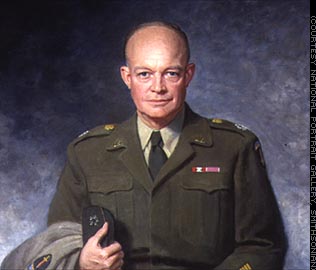
    Military-Industrial Complex Speech

    "In the councils of government, we must guard against the acquisition
    of unwarranted influence, whether sought or unsought, by the
    militaryindustrial complex. The potential for the disastrous rise of
    misplaced power exists and will persist.

    We must never let the weight of this combination endanger our
    liberties or democratic processes. We should take nothing for granted.
    Only an alert and knowledgeable citizenry can compel the proper
    meshing of the huge industrial and military machinery of defense with
    our peaceful methods and goals, so that security and liberty may
    prosper together. " --, Dwight D. Eisenhower, 1961
    full text:

    http://coursesa.matrix.msu.edu/~hst306/documents/indust.html

    1.25.2009

    Adam Smith The Theory of the Moral Sentiments 1759

    The father of Capitalism did not see it in the eutopian way we do today. Capitalism is simply an amoral financial system. It is not a philosophy of life. --Lee

    Adam Smith
    The Theory of the Moral Sentiments
    1759


    The poor man's son, whom heaven in its anger has visited with ambition, when he begins to look around him, admires the condition of the rich. He finds the cottage of his father too small for his accommodation, and fancies he should be lodged more at his ease in a palace. He is displeased with being obliged to walk a-foot, or to endure the fatigue of riding on horseback. He sees his superiors carried about in machines, and imagines that in one of these he could travel with less inconveniency. He feels himself naturally indolent, and willing to serve himself with his own hands as little as possible; and judges, that a numerous retinue of servants would save him from a great deal of trouble. He thinks if he had attained all these, he would sit still contentedly, and be quiet, enjoying himself in the thought of the happiness and tranquillity of his situation. He is enchanted with the distant idea of this felicity. It appears in his fancy like the life of some superior rank of beings, and, in order to arrive at it, he devotes himself for ever to the pursuit of wealth and greatness. To obtain the conveniencies which these afford, he submits in the first year, nay in the first month of his application, to more fatigue of body and more uneasiness of mind than he could have suffered through the whole of his life from the want of them. He studies to distinguish himself in some laborious profession. With the most unrelenting industry he labours night and day to acquire talents superior to all his competitors. He endeavours next to bring those talents into public view, and with equal assiduity solicits every opportunity of employment. For this purpose he makes his court to all mankind; he serves those whom he hates, and is obsequious to those whom he despises. Through the whole of his life he pursues the idea of a certain artificial and elegant repose which he may never arrive at, for which he sacrifices a real tranquillity that is at all times in his power, and which, if in the extremity of old age he should at last attain to it, he will find to be in no respect preferable to that humble security and contentment which he had abandoned for it. It is then, in the last dregs of life, his body wasted with toil and diseases, his mind galled and ruffled by the memory of a thousand injuries and disappointments which he imagines he has met with from the injustice of his enemies, or from the perfidy and ingratitude of his friends, that he begins at last to find that wealth and greatness are mere trinkets of frivolous utility, no more adapted for procuring ease of body or tranquillity of mind than the tweezer-cases of the lover of toys; and like them too, more troublesome to the person who carries them about with him than all the advantages they can afford him are commodious. There is no other real difference between them, except that the conveniencies of the one are somewhat more observable than those of the other. The palaces, the gardens, the equipage, the retinue of the great, are objects of which the obvious conveniency strikes every body. They do not require that their masters should point out to us wherein consists their utility. Of our own accord we readily enter into it, and by sympathy enjoy and thereby applaud the satisfaction which they are fitted to afford him. But the curiosity of a tooth-pick, of an ear-picker, of a machine for cutting the nails, or of any other trinket of the same kind, is not so obvious Their conveniency may perhaps be equally great, but it is not so striking, and we do not so readily enter into the satisfaction of the man who possesses them. They are therefore less reasonable subjects of vanity than the magnificence of wealth and greatness; and in this consists the sole advantage of these last. They more effectually gratify that love of distinction so natural to man. To one who was to live alone in a desolate island it might be a matter of doubt, perhaps, whether a palace, or a collection of such small conveniencies as are commonly contained in a tweezer-case, would contribute most to his happiness and enjoyment. If he is to live in society, indeed, there can be no comparison, because in this, as in all other cases, we constantly pay more regard to the sentiments of the spectator, than to those of the person principally concerned, and consider rather how his situation will appear to other people, than how it will appear to himself. If we examine, however, why the spectator distinguishes with such admiration the condition of the rich and the great, we shall find that it is not so much upon account of the superior ease or pleasure which they are supposed to enjoy, as of the numberless artificial and elegant contrivances for promoting this ease or pleasure. He does not even imagine that they are really happier than other people: but he imagines that they possess more means of happiness. And it is the ingenious and artful adjustment of those means to the end for which they were intended, that is the principal source of his admiration. But in the languor of disease and the weariness of old age, the pleasures of the vain and empty distinctions of greatness disappear. To one, in this situation, they are no longer capable of recommending those toilsome pursuits in which they had formerly engaged him. In his heart he curses ambition, and vainly regrets the ease and the indolence of youth, pleasures which are fled for ever, and which he has foolishly sacrificed for what, when he has got it, can afford him no real satisfaction. In this miserable aspect does greatness appear to every man when reduced either by spleen or disease to observe with attention his own situation, and to consider what it is that is really wanting to his happiness. Power and riches appear then to be, what they are, enormous and operose machines contrived to produce a few trifling conveniencies to the body, consisting of springs the most nice and delicate, which must be kept in order with the most anxious attention, and which in spite of all our care are ready every moment to burst into pieces, and to crush in their ruins their unfortunate possessor. They are immense fabrics, which it requires the labour of a life to raise, which threaten every moment to overwhelm the person that dwells in them, and which while they stand, though they may save him from some smaller inconveniencies, can protect him from none of the severer inclemencies of the season. They keep off the summer shower, not the winter storm, but leave him always as much, and sometimes more exposed than before, to anxiety, to fear, and to sorrow; to diseases, to danger, and to death.